
Don't let limitations stop you from moving forward
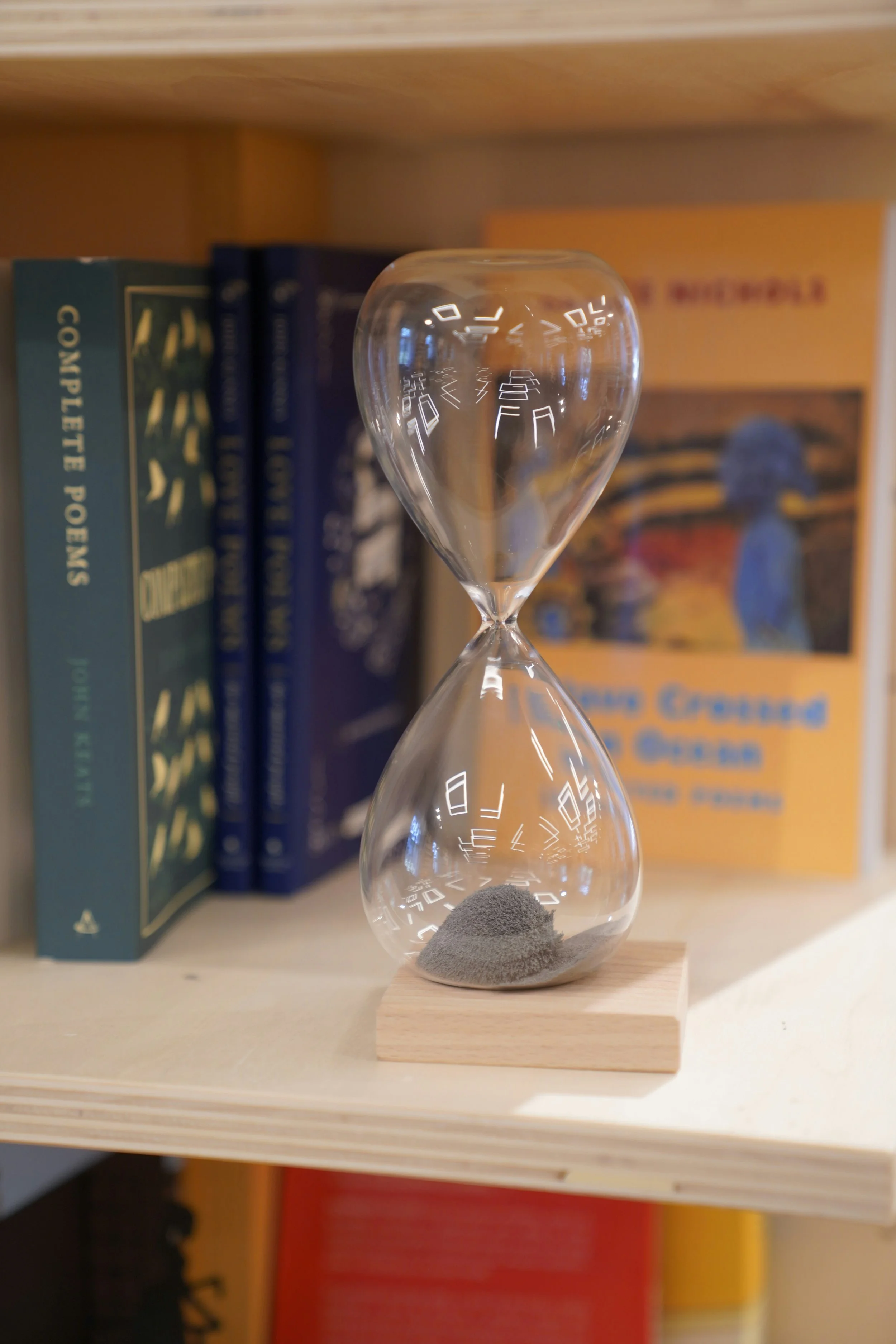
Have you ever wanted to pursue something new? A change of career, a new study path, or a shift in a relationship dynamic? Have you ever felt as if you are just watching time pass, wondering why there is no movement?
The other night, I watched David the Medium live. He connected so beautifully to the spirit world and explained what he has learned to do to connect to guidance beyond us. One of the techniques he used at the beginning of his development was "calling heaven"—literally, through an imaginary phone. He would call heaven and have that conversation, temporarily removing all doubt and fear to trust exactly what he heard.
I thought this was beautiful. However people choose to make that connection—whether through movement, writing, sport, silence, or like David, calling heaven—we all have the capacity to do it.
He also said that it's okay not to know, because so many of us don’t know. It's true, isn’t it? Isn’t some part of life meant to be a mystery? Meant to be a journey? We might have inklings and instincts—sometimes clear, other times not so—coming to us in unexpected ways. It is then up to us to be open enough to allow ourselves to experience something new.
Finding Freedom in the Unknown
Michael Singer, author of The Surrender Experiment, writes about letting go of control and how it allows us to find joy in this whole human experience. He speaks about how, if we make surrender a daily practice, we can find freedom within any experience.
Many intuition experts say that it is simply a matter of following the subtle guidance available to us at all times; it's always there. Sometimes, we can’t put it into logic or understand it, but it's guiding us. Sometimes, we are just too dysregulated or don’t have enough stillness in our lives to recognize this guidance. But it’s always there, waiting for us. Whether it is our own spirit, God, or some other form of universal support, it exists. Perhaps it’s just a matter of whether we are willing to believe it or not.
And yet, when life is uncertain or tumultuous—when we’re moving through ache, pain, anger, or rage—it can be incredibly frustrating to read or hear positive platitudes. When a message doesn't attune to our current reality, it can feel dismissive. We want to honor these feelings of frustration, and we absolutely can. We often forget that we can do two things at once: we can make space for our difficult emotions, and make space for hope too.
The Power of Compassion
It is compassion that allows us to hold both. Pema Chödrön, in her book Start Where You Are, says that we are always searching for solid ground, yet there is no solid ground—a realization that actually frees us from needing all the answers. Similarly, Kristin Neff writes in Self-Compassion that if we can meet ourselves in our ache and anger with kindness, we can heal the relationships we have with ourselves and others.
When we meet ourselves there, if there is even the tiniest spark of light or hope, we need to remember that it is alive. It is intelligence, and it is there for us to nurture.
Even when we find ourselves self-sabotaging, it is up to us to let go of control. We can be in the depth of grief and rage, and still surrender to this experiment of life. It might sound annoying, and it might feel like a challenge, but what do we have to lose by imagining that there is hope, even if it physically doesn’t feel like it yet? Our imagination is available to us in all moments.
What else can we do when we are not entirely sure about this guidance? When we don’t trust it? What can help us when the path becomes too scary or too distant?
When we want to change, how do we find the courage or confidence to make a pivot? To leave a relationship that is no longer aligned even when we are terrified of loss? To study something new? To reach out to someone you want as a friend? To say no, and refuse to feed the old stories that no longer serve you?
Tools for Inner Healing
Here are some things that I have seen help people navigate these exact hurdles within a counselling context, as well as within my own life:
Acceptance: Accept the grief, the rage, the anger, and the sleepless nights. Accept the bad habits for a moment—they likely made sense at some point to help you cope. Learning to love yourself even in the midst of doubt, fear, and self-destruction is vital. From there, slowly over time, you learn to accept all of you. That is what truly loving yourself means: allowing yourself to hold strong emotions, while also allowing yourself to be free within them.
Make Space for Grief: Grief is layered, complex, and deeply honest. A friend of mine who recently experienced a profound heartbreak told me that she entered a place of pain that felt entirely identical to love. It is a raw, powerful emotion because it demands pure presence. It reminds us that we are here, and we are alive.
Make It Less Personal: Your struggles are part of the shared human condition. We all have journeys that don’t always make sense, and we all carry patterns and conditioning. At our core, we want the same things: love, acceptance, belonging, and joy. We also want to give that back to the world. Navigating this is both the easiest and most challenging part of life. All of this inner work—the identity changes, healing from trauma, and managing anxiety—is ultimately a gift to the world. It is a service that has a purpose beyond what we might fully understand right now.
How This Connects to Counselling
While counselling isn't the only path to healing, it helps many people move forward for a few distinct reasons:
1. The Desire to Be Truly Seen
We all have a deep desire to be understood. While you may have supportive friends or family, many people enjoy the unique relationship that a professional counsellor provides. It creates a safe, objective space that allows us to be truly honest and seen in our truth. Being vulnerable with a stranger can sometimes feel much safer than being vulnerable with those closest to us, creating a positive ripple effect through the rest of our lives.
2. We Learn and Process by Speaking
Speaking out loud is not entirely about finding immediate answers. Ultimately, we want clarity, goals, and a sense of forward momentum. However, so many of us suppress what we have already survived or where we currently are. Movement is constant, and emotional movement happens in every single session.
This is incredibly beneficial when working through anxiety, because true change happens when we find the capacity to sit with feelings of discomfort while simultaneously tapping into feelings of hope and possibility.
3. Accountability and Belief
A therapist acts as a collaborative partner, helping you grow your capacity to hold big emotions and reminding you that it’s okay when you feel overwhelmed.
Belief is incredibly powerful. Sometimes, all we need is for someone else to believe in us before we can fully believe in ourselves. We need someone to see us in our truth, our light, and our strength.
A Pathway Forward in Noosa Heads
The way I practice is not about suppressing doubt, pain, or confusion. Understanding where these feelings come from matters. It helps bring clarity to our thoughts and helps us understand why we experience specific triggers. Often, we discover the anxiety or beliefs we carry aren't even ours—they are identities and expectations placed on us by others to maintain acceptance and belonging.
Choosing yourself means you might let people down or trigger those around you who aren't used to you setting boundaries. But in therapy, we practice letting that go. We bring the focus back to belief—to what is possible if we allow ourselves to dream and connect to what feels genuinely joyful and nourishing to us individually.
This work is hard. It is raw, it stretches us, and it can hurt. But I have always felt that we are born knowing who we are at our core. If you are looking for support in navigating anxiety, finding compassion, or rewriting your story, please reach out. As a dedicated Noosa Heads counsellor, I would love to meet you and help you reconnect with your essence.
Warmly,
Alana